

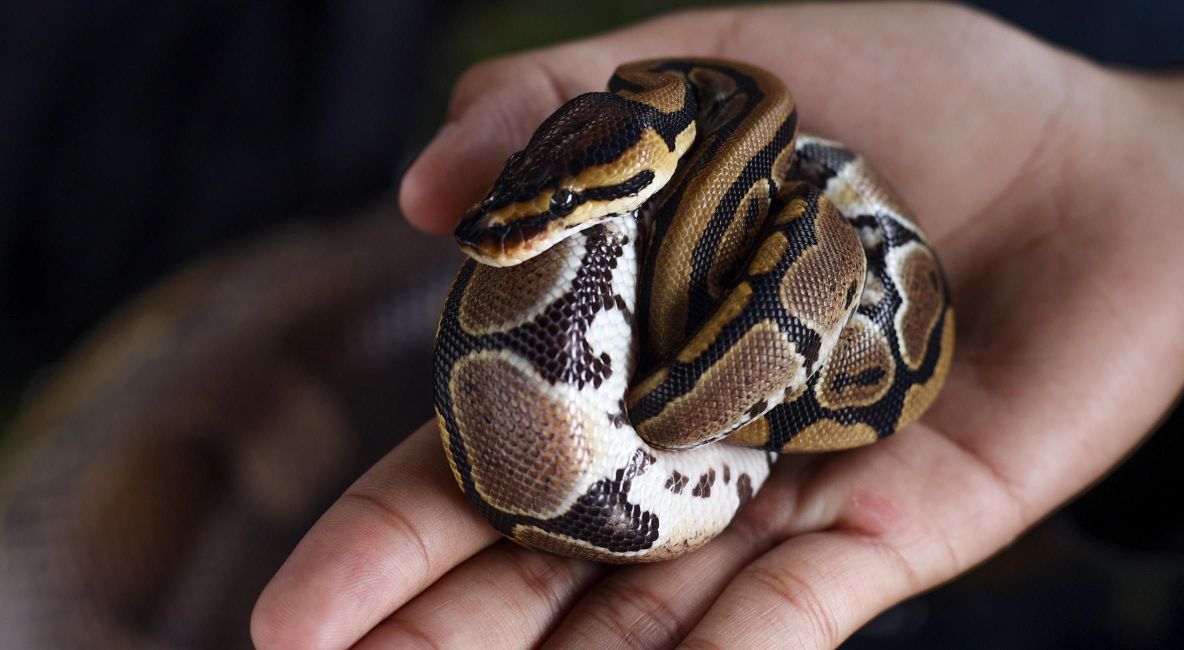
Natural Habitat and History in Captivity
Ball pythons are native to West and Central Africa, inhabiting grasslands, savannas, and sparsely wooded areas. They are commonly found in countries such as Ghana, Togo, Benin, and Nigeria, where they spend much of their time hiding in burrows and termite mounds.
In captivity, ball pythons have become popular pets due to their docile nature, manageable size, and beautiful color variations. Historically, they were primarily from the wild, leading to stress and health issues. However, captive breeding programs have grown, reducing the demand for wild-caught individuals and ensuring healthier pets.
Habitat
Enclosure
Provide a secure enclosure that is at least 36" x 18" x 12" for an adult ball python. Use a glass tank or plastic tub.
Substrate
Use cypress mulch, coconut husk, or paper towels for burrowing and humidity.
Temperature
Maintain 75-85°F cool side and 85-90°F warm side with a heat mat or ceramic heat emitter.
Humidity
Keep humidity at 50-60% with a humid hide for shedding.
Feeding
Diet
Feed appropriately sized frozen-thawed rodents. Adjust prey size to match the snake's body width.
Feeding Schedule
Feed juveniles every 5-7 days, adults every 7-10 days.
Handling
Approach calmly and support the body to prevent stress and injury.
Avoid handling post-feeding or during shedding.
Health and Wellness
Monitor for signs of illness like wheezing, mouth rot, or mites.
Provide fresh water and clean the enclosure regularly.
Understanding a ball python's natural habitat and history in captivity can help you provide appropriate care for the species. If you have more questions or need further information, feel free to ask!


