
Green anole is one of the most commonly encountered small lizards in the reptile hobby and is often overlooked due to its availability. However, when properly understood and kept in a well-designed environment, it becomes a fascinating, active display species that shows constant natural behavior throughout the day. These are not “hands-on” reptiles—they are observation animals that reward a well-planned habitat.
At Show Me Reptiles, green anoles are appreciated for their simplicity in concept but sensitivity in execution. When their environment is correct, they thrive and display constant movement, color change, and natural hunting behavior.
Natural History & Behavior
Green anoles are native to the southeastern United States, where they inhabit humid forests, shrubs, and suburban vegetation. They are highly arboreal, spending most of their time climbing branches, leaves, and vertical surfaces while hunting small insects.
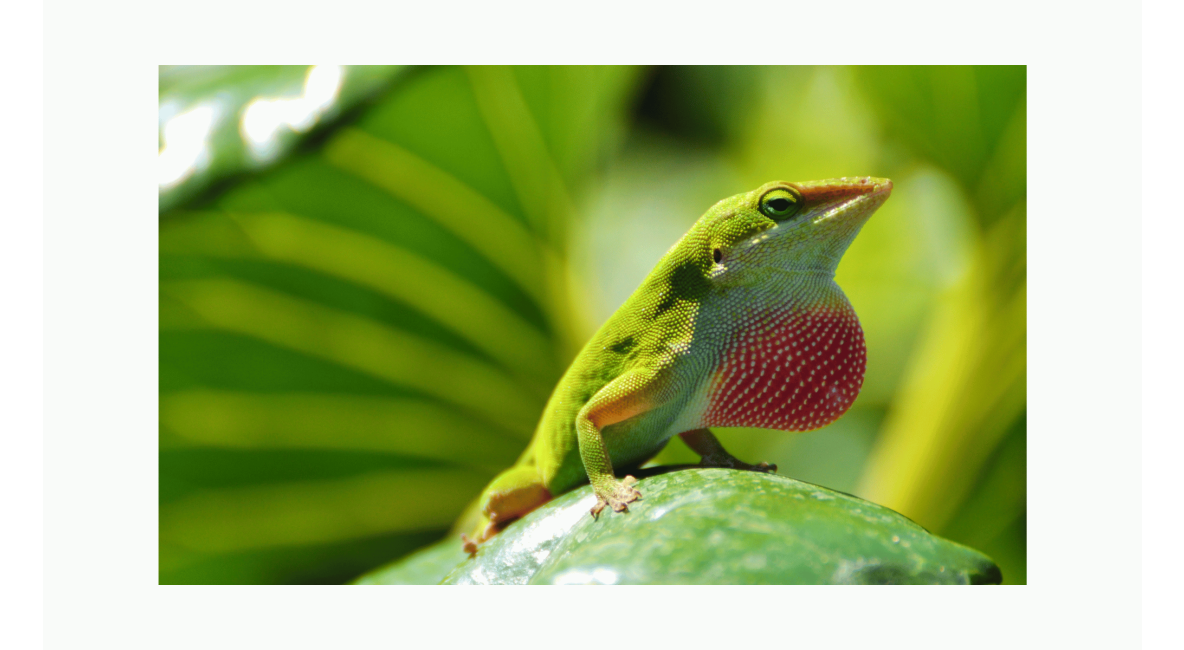
One of their most recognizable traits is their ability to change color from bright green to brown depending on stress, temperature, and environmental conditions. This is not true camouflage in the chameleon sense, but rather a physiological response to surroundings and mood.
Males are territorial and often display a bright pink or red dewlap to communicate dominance or attract mates.
Enclosure Setup
Green anoles thrive in vertically oriented, heavily planted enclosures that replicate dense vegetation and high humidity environments.
Core requirements:
-
Minimum enclosure: 18x18x24 inches for a small group or pair (larger preferred)
-
Temperature gradient: 75–80°F ambient
-
Basking area: 85–88°F
-
Night drop: mid-70s acceptable
-
Humidity: 60–80%
Vertical space is more important than floor space. Live or dense artificial plants, branches, and vines are essential to provide climbing paths and cover.
UVB lighting is strongly recommended to support calcium metabolism and overall health.
A steady misting schedule or automated fogging system helps maintain humidity and encourages natural drinking behavior from leaves.
Diet & Feeding
Green anoles are insectivores with fast metabolisms and require frequent, appropriately sized prey items.
Staple diet:
-
Small crickets
-
Fruit flies (for juveniles)
-
Small roaches
-
Occasional small worms or larvae
Prey should always be gut-loaded and dusted with calcium and vitamin supplements to prevent deficiencies.
Juveniles typically require daily feeding, while adults can be fed every other day depending on body condition and activity level.
Handling & Behavior Expectations
Green anoles are not a handling species. While they may tolerate brief, minimal contact over time, they are highly stress-prone and prefer not to be touched or restrained.
Most of their value in captivity comes from observation—watching hunting behavior, territorial displays, and natural movement through a planted enclosure.
Attempting frequent handling can lead to chronic stress and poor health outcomes.
Common Health Concerns
Most health issues in green anoles stem from improper enclosure conditions.
Common concerns include:
-
Dehydration (inadequate humidity or misting)
-
Metabolic bone disease (lack of UVB or calcium supplementation)
-
Stress-related weight loss or lethargy
-
Respiratory infections from stagnant, overly wet environments
Because of their small size, they can decline quickly if conditions are not stable.
Final Insight: Why Green Anoles Are Better Than Their Reputation
Green anoles are often dismissed as “basic” reptiles, but in reality, they are sensitive indicators of environmental quality. When their habitat is properly built—humid, planted, and vertically complex—they become active, colorful, and constantly engaging to observe.
For keepers at Show Me Reptiles, they represent a reminder that even small, common species can be rewarding when their natural behavior is respected and properly supported in captivity.


