
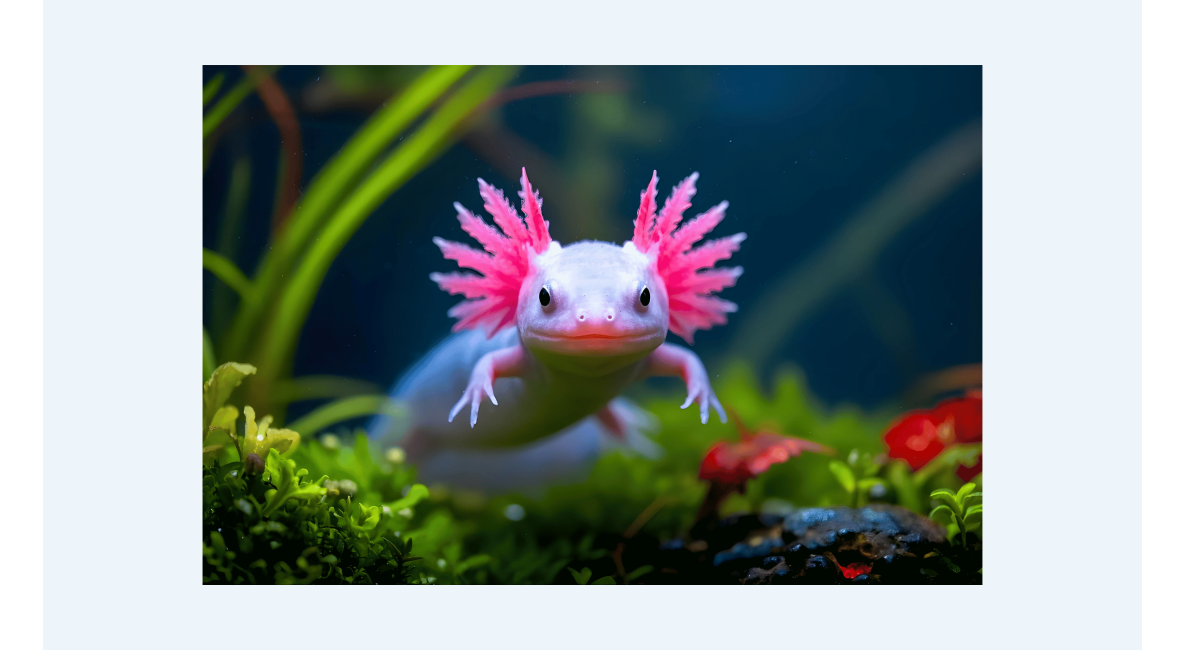
Axolotl is one of the most recognizable amphibians in the hobby, known for its permanently aquatic lifestyle, external gills, and remarkable ability to regenerate limbs and tissue. Unlike most amphibians that transition onto land, axolotls remain in a juvenile (neotenic) state their entire lives, making them fully aquatic and entirely dependent on stable water conditions.
At Show Me Reptiles, axolotls are viewed as a specialized aquatic species that are deceptively simple in appearance but highly sensitive to water quality, temperature, and tank stability.
Natural History & Biology
Axolotls are native to the lake complex of Xochimilco in Mexico. In the wild, they are critically endangered due to habitat loss, pollution, and invasive species, making most individuals in the hobby captive-bred.
Their most unique biological trait is neoteny—they retain juvenile features such as external gills and an aquatic lifestyle throughout their lives instead of undergoing metamorphosis into a terrestrial form.
They are primarily ambush predators, feeding on small fish, worms, insect larvae, and other aquatic prey that they locate through movement and scent.
Tank Setup & Water Parameters
Axolotls require fully aquatic setups with stable, cold, clean water conditions.
Core requirements:
-
Tank size: 20-gallon long minimum for one adult (larger recommended)
-
Temperature: 60–68°F (cool, stable water is critical)
-
pH: 6.5–8.0 (stable is more important than exact number)
-
Filtration: gentle flow (sponge filters or low-flow systems preferred)
-
Substrate: fine sand or bare bottom (avoid gravel due to impaction risk)
They are highly sensitive to water quality, especially ammonia and nitrites, so a fully cycled aquarium is essential before introduction.
Decor should include hides, caves, and low-light plants to reduce stress and provide security without strong currents.
Diet & Feeding
Axolotls are carnivorous and do best on protein-rich, soft-bodied foods.
Staple diet:
-
Earthworms (one of the best staple foods)
-
Bloodworms (supplemental, not sole diet)
-
Soft sinking pellets formulated for carnivorous aquatic amphibians
-
Occasional small pieces of shrimp or fish (sparingly)
Juveniles may require daily feeding, while adults are typically fed 2–3 times per week depending on temperature and metabolism.
Overfeeding can quickly lead to water quality issues, so portion control is important.
Behavior & Handling
Axolotls are not a handling species. They have delicate skin and gill structures that can be easily damaged by improper handling or exposure to air.
They are best observed in their aquarium environment, where they display slow movement, substrate foraging, and occasional bursts of feeding activity.
Most individuals become accustomed to routine feeding times and may approach the glass when food is expected.
Common Health Concerns
Axolotls are highly sensitive to environmental imbalance, and most health issues are related to water quality.
Common concerns include:
-
Ammonia or nitrite poisoning (in uncycled tanks)
-
Stress from high temperatures (leading to loss of appetite or fungus)
-
Fungal infections on gills or skin
-
Impaction from inappropriate substrate
-
Poor regeneration or injury from tankmates or sharp décor
Cool, clean, stable water is the single most important factor in long-term health.
Final Insight: What Makes Axolotls So Unique in Captivity
Axolotls represent a rare combination of simplicity in appearance and complexity in care. While they do not require land space or complex enrichment structures, they depend heavily on precise aquatic conditions that must remain stable over time.
For keepers at Show Me Reptiles, they stand out as one of the most biologically fascinating amphibians in the hobby—quiet, unusual, and deeply rewarding when their aquatic environment is properly maintained.


