

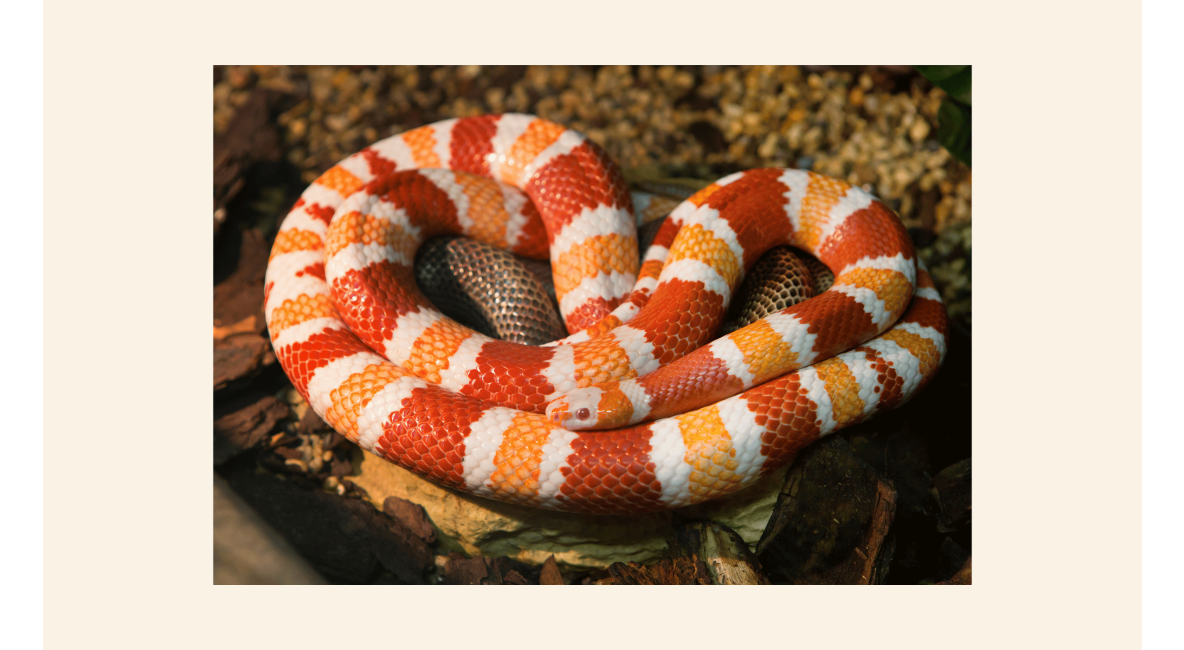
Milk snakes prove that some of the most rewarding reptiles in the hobby don't have to be the largest or the rarest. Their bold colors, active personalities, and adaptable nature have made them a favorite among keepers for decades, offering an ideal balance of visual appeal and straightforward husbandry.
At Show Me Reptiles, milk snakes continue to be a favorite because they combine eye-catching beauty with practical husbandry. They're inquisitive, resilient, and rewarding to watch as they explore their surroundings and settle into a predictable daily routine.
Natural History & Behavior
Milk snakes are native to North, Central, and parts of South America, where different subspecies occupy habitats ranging from forests and rocky hillsides to grasslands and farmland. This wide natural distribution has made them highly adaptable to a variety of environmental conditions.
In the wild, they spend much of their time hidden beneath logs, rocks, or leaf litter, emerging during the evening or cooler parts of the day to hunt. Their diet consists primarily of rodents, lizards, amphibians, birds, and occasionally other snakes.
Captive milk snakes are naturally curious and active, often exploring every corner of their enclosure once they become comfortable in their environment.
Enclosure Setup
Milk snakes thrive in secure enclosures that provide both warmth and plenty of hiding opportunities.
Basic enclosure requirements:
- Juveniles: 20-gallon long enclosure minimum
- Adults: 40-gallon breeder or larger
- Warm side: 84–88°F
- Cool side: 72–78°F
- Humidity: 40–60%, with a humid hide available during shedding
At least two snug hides should be provided—one on the warm side and one on the cool side. Branches, cork bark, artificial plants, and climbing opportunities also help encourage natural behaviors while providing additional security.
Because milk snakes are skilled escape artists, a secure, locking enclosure is essential.
Diet & Feeding
Milk snakes are carnivores and generally enthusiastic feeders, making feeding one of the easiest parts of their care.
Feeding schedule:
- Hatchlings: appropriately sized pinky mice every 5–7 days
- Juveniles: feeder mice every 7 days
- Adults: adult mice every 10–14 days
Frozen-thawed rodents are the safest and most commonly recommended food source. Prey should be no wider than the snake's thickest body section.
Fresh water should always be available and changed regularly.
Handling & Temperament
Milk snakes are alert and energetic, especially when young. Juveniles may be quick to flee or musk if startled, but regular, gentle handling usually helps them become more confident over time.
Adults often develop into calm, manageable snakes, although they typically remain more active during handling than species like ball pythons. Their curiosity makes them enjoyable to observe both inside and outside the enclosure.
Giving your milk snake time to settle after bringing it home before beginning regular handling helps build trust and reduce stress.
Common Health Concerns
Milk snakes are generally hardy when provided with proper husbandry, but keepers should still monitor for common captive health issues.
These may include:
- Respiratory infections caused by incorrect temperatures
- Incomplete sheds due to low humidity
- Obesity from overfeeding
- Mites or parasites introduced through poor quarantine practices
- Minor abrasions from rough enclosure décor
Maintaining clean enclosures, appropriate temperatures, and a consistent feeding schedule goes a long way toward preventing health problems.
Why Milk Snakes Continue to Be a Keeper Favorite
Milk snakes offer an ideal balance of beauty, personality, and straightforward care. Their vibrant colors attract attention, but it's their adaptability and active nature that keep hobbyists interested for years. Whether they're weaving through branches, investigating a new hide, or eagerly anticipating feeding day, they rarely fail to keep things interesting.
For keepers at Show Me Reptiles, milk snakes remain one of the most versatile colubrids available—equally suited for someone purchasing their first snake or adding another fascinating species to an established collection.


