

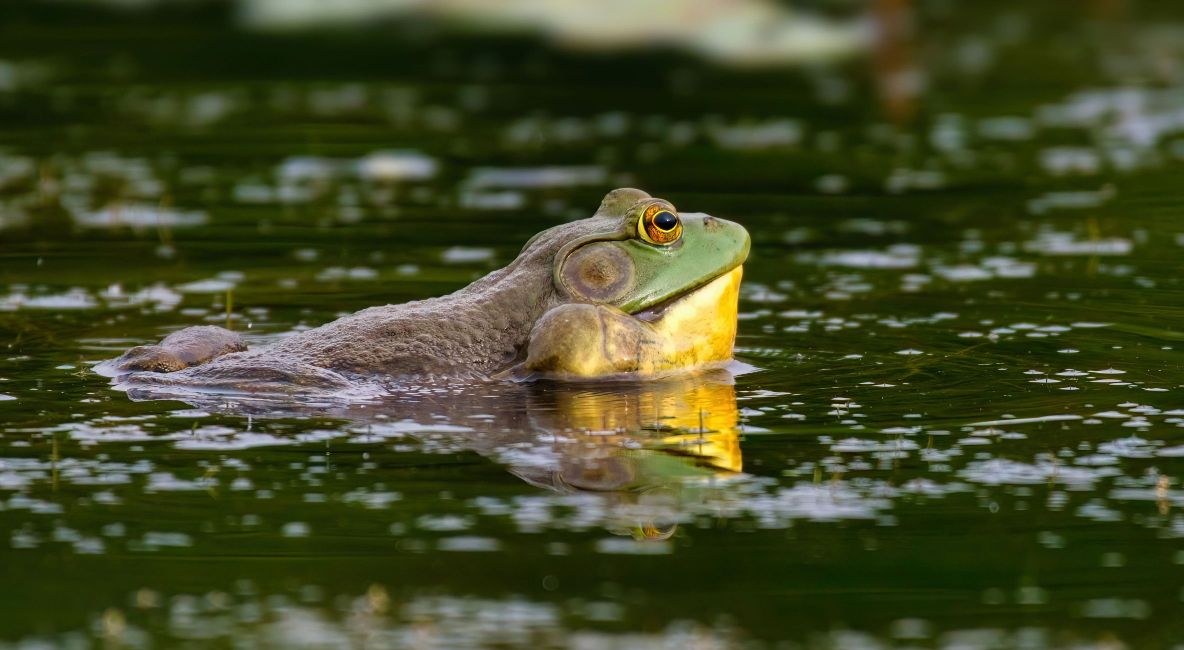
Bullfrogs are fascinating creatures that have captivated the hearts of nature enthusiasts and scientists alike. Known for their impressive size and distinctive croaks, these amphibians hold a unique place in ecosystems around the world. Let's explore the captivating life of bullfrogs, their habitat, behavior, and some fun facts that will make you see these croaking champions in a whole new light!
What Are Bullfrogs?
Bullfrogs, scientifically known as Lithobates catesbeianus, are the largest frogs in North America. They can grow to be quite hefty, with adults reaching sizes of up to 8 inches (20 cm) in length. Their smooth, green or brown skin helps them blend into their surroundings, making it easier to ambush prey and avoid predators.
Habitat and Distribution
Bullfrogs are found throughout the United States and Canada, preferring warm, stagnant waters like ponds, lakes, and marshes. They thrive in areas with plenty of vegetation, which provides shade, hiding spots, and ample opportunities for hunting.
These amphibians are quite adaptable and can even be found in man-made environments. However, they require water for breeding, so their presence often indicates a healthy aquatic ecosystem.
The Bullfrog Life Cycle
Bullfrogs start their lives as tiny eggs laid in water during the warmer months. A single female can lay up to 20,000 eggs, which hatch into tadpoles within a week. These tadpoles can be quite different from their adult counterparts—typically darker and wholly aquatic, they breathe through gills and live off algae.
As the tadpoles grow, they undergo metamorphosis, developing limbs and lungs, allowing them to transition to land. This process can take anywhere from a few months to several years, depending on environmental conditions. The juvenile bullfrogs, once fully developed, emerge from the water to start their terrestrial life.
Diet and Predation
Bullfrogs are carnivorous and have quite the appetite, feeding on a variety of prey including insects, small fish, crustaceans, and even other frogs! Their voracious eating habits make them effective predators. However, they are also prey for many animals, such as snakes, birds, and larger mammals, illustrating the balance of their role in the ecosystem.
The Croaking Phenomenon
One of the most notable features of bullfrogs is their loud and distinctive croak. Male bullfrogs are known for their deep, resonating calls, especially during mating season when they compete to attract females. Their croaks can be heard from quite a distance, contributing to the natural symphony of spring and summer evenings in their habitats.
The sound is created by inflating vocal sacs located on either side of their throat, which amplify their calls. Each bullfrog has a unique croak, which helps females identify potential mates.
Fun Facts About Bullfrogs
Long Lifespan
Bullfrogs can live for 7 to 9 years in the wild, but their lifespan can extend to over 15 years in captivity!
Cold Weather Hibernate
During colder months, bullfrogs hibernate in mud at the bottom of ponds or lakes, slowing their metabolism and surviving until warmer weather returns.
Amazing Jumpers
Bullfrogs can leap up to 10 times their body length! This impressive skill helps them escape predators and catch their prey.
Invasive Species
In some areas outside their native range, bullfrogs have become invasive, competing with local amphibians for resources. Their adaptability contributes to their success in new environments.
Cultural Significance
Bullfrogs appear in various folklore and cultural references, often symbolizing transformation and adaptability, due to their remarkable life cycle.
Bullfrogs are more than just loud croakers; they play a vital role in their ecosystems and are a testament to the wonders of amphibian life. By understanding and appreciating these incredible creatures, we can better appreciate the delicate balance of nature they help maintain. So, the next time you hear that familiar croak echoing in the night, take a moment to appreciate the bullfrog, nature's very own croaking champion!


