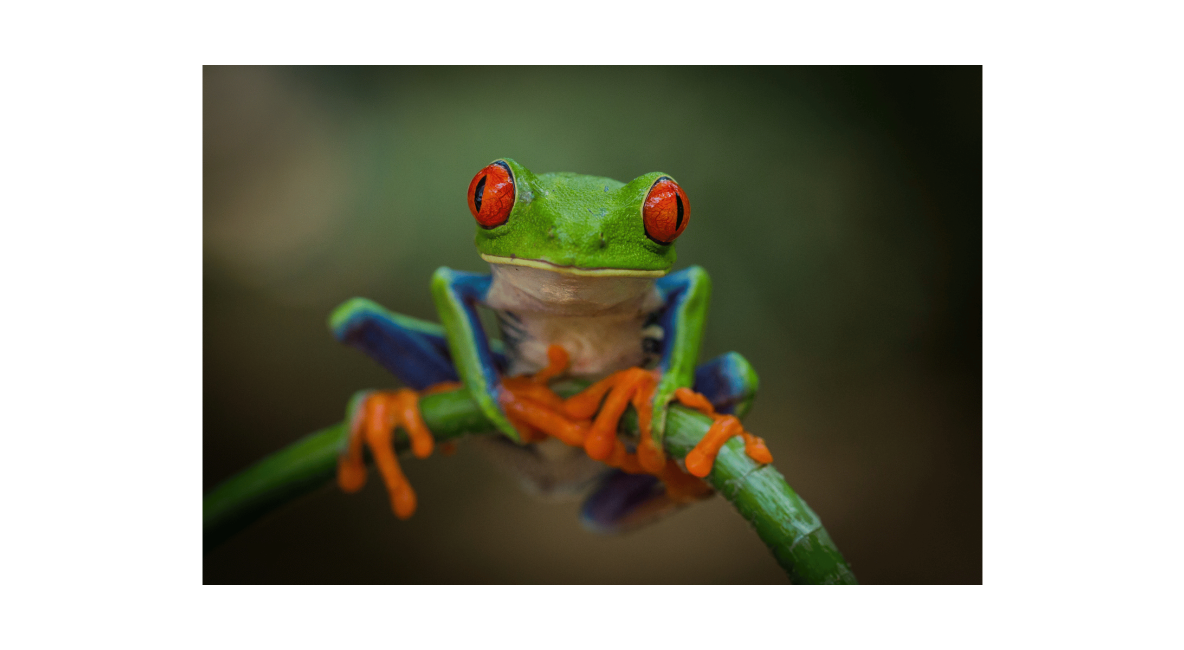
The red-eyed tree frog is one of the most iconic amphibians in the reptile hobby, instantly recognizable by its bright green body, striking red eyes, and vivid blue-and-yellow flank coloration. While often considered a “showpiece” species, its care is more nuanced than its appearance suggests, requiring stable humidity cycles, careful temperature control, and a well-structured arboreal enclosure to truly thrive.
At Show Me Reptiles, red-eyed tree frogs are appreciated as high-impact display animals that reward proper setup with constant visual activity, especially during nighttime hours when they become most active.
Natural History & Behavior
Red-eyed tree frogs are native to lowland rainforests in Central America, including parts of Mexico, Costa Rica, Panama, and surrounding regions. They spend most of their lives in trees and dense vegetation, coming down to water sources only for breeding.
They are nocturnal and highly arboreal, relying on camouflage during the day. When resting, they close their bright red eyes and tuck their limbs tightly against their body, blending into green foliage. At night, they become active hunters, feeding on insects and small invertebrates.
Their vivid coloration is primarily a defensive display meant to startle predators, giving them a brief moment to escape.
Enclosure Setup
Red-eyed tree frogs require a vertically oriented, heavily planted terrarium that maintains high humidity while still allowing airflow.
Core requirements:
-
Minimum enclosure: 18x18x24 inches for a small group (larger preferred)
-
Temperature: 75–82°F daytime range
-
Night drop: mid-60s to low 70s is beneficial
-
Humidity: 70–90% with daily cycling (wet to slightly dry periods)
A naturalistic setup with live or artificial plants, cork bark, vines, and broad leaves is essential. These frogs rely heavily on surface coverage for security and hydration.
Proper ventilation is just as important as humidity—stagnant, overly wet air can quickly lead to health issues.
Diet & Feeding
Red-eyed tree frogs are insectivores with fast metabolisms and require a consistent feeding schedule.
Staple diet:
-
Crickets
-
Small roaches
-
Fruit flies (juveniles)
-
Small moths or flying insects when available
All feeder insects should be gut-loaded and dusted with calcium and vitamin supplements.
Juveniles are typically fed daily, while adults are fed every 2–3 days depending on body condition.
Behavior & Handling
Red-eyed tree frogs are strictly observation animals. While they are visually stunning and often calm when resting, they are extremely sensitive to handling due to their permeable skin.
Stress from handling can lead to dehydration, immune suppression, and long-term health decline, so interaction should be limited to enclosure maintenance only.
Their behavior is best appreciated in a dimly lit, planted enclosure where their natural night activity can be observed.
Common Health Concerns
Red-eyed tree frogs are sensitive amphibians, and most issues are related to environmental instability.
Common concerns include:
-
Dehydration from low humidity or poor misting cycles
-
Skin infections from dirty or stagnant water surfaces
-
Stress-related decline from improper temperatures or handling
-
Metabolic bone disease from inadequate UVB or calcium supplementation
-
Bacterial infections in overly wet, unventilated setups
Consistency in humidity cycling and cleanliness is essential for long-term success.
Final Insight: What Makes Red-Eyed Tree Frogs Stand Out in Captivity
Red-eyed tree frogs are not beginner-proof, but they are incredibly rewarding when their needs are understood and met. They combine striking coloration with highly specialized arboreal behavior, making them one of the most visually impressive amphibians in a well-designed rainforest-style enclosure.
For keepers at Show Me Reptiles, they represent the balance between beauty and precision—an animal that thrives only when its environment closely mirrors the rhythm of a natural rainforest canopy.


