

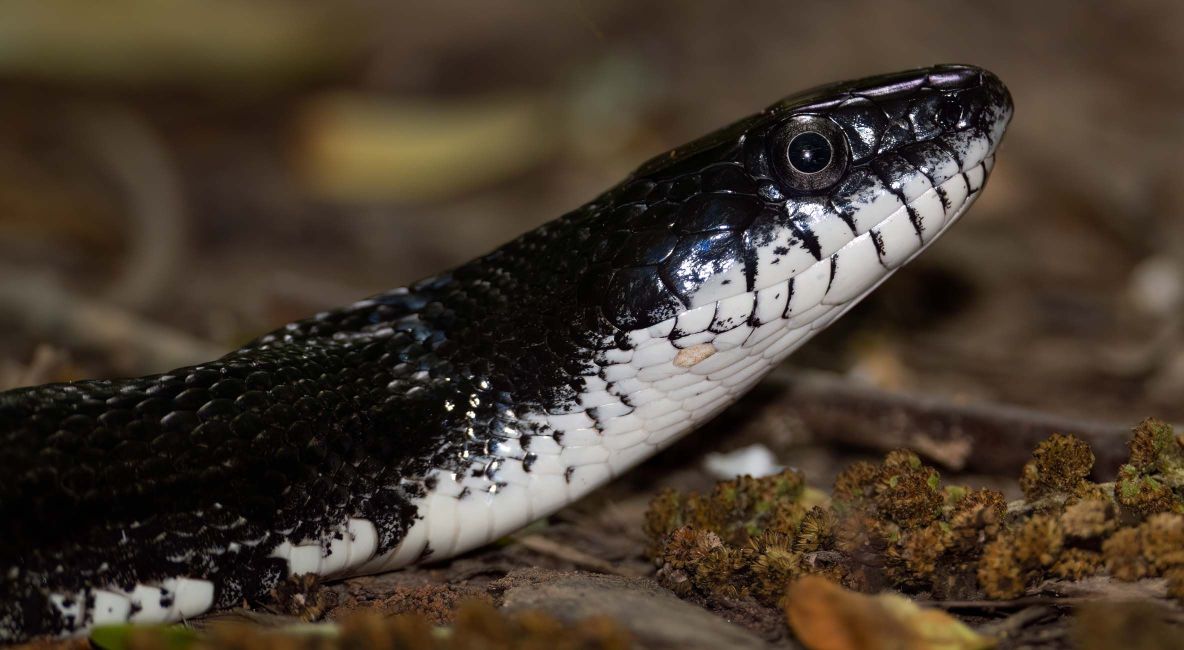
Black rat snakes, scientifically known as Pantherophis obsoletus, are a species of non-venomous snakes endemic to North America. These impressive serpents, often referred to as Eastern rat snakes, are recognized not only for their size, but also for their vital role in controlling rodent populations.
Size and Physical Characteristics
Black rat snakes are the largest snakes found in North America, reaching lengths of up to 6-8 feet on average, with exceptional individuals growing even longer. They have sleek, slender bodies covered in shiny scales, ranging in color from solid black to dark brown. Younger snakes often have blotches or patterns on their skin, which fade as they mature.
Distribution and Habitat
These snakes have a broad range across eastern and central North America, from southern Canada down to Florida and west to the Mississippi River. Black rat snakes are highly adaptable and can thrive in a variety of habitats, including forests, woodlands, grasslands, swamps, and even suburban areas. They are excellent climbers and can often be found sunning themselves on tree limbs or hiding in rock crevices.
Diet and Hunting Behavior
As their name suggests, black rat snakes have a strong affinity for rodents, particularly rats and mice. They are skillful hunters and use a combination of stealth, patience, and speed to capture their prey. These snakes will often climb trees and drop down onto unsuspecting rodents from above. They also consume other small vertebrates like birds, eggs, and occasionally smaller snakes.
Life Cycle and Reproduction
Black rat snakes are oviparous, meaning they lay eggs. Mating typically occurs in spring, and the eggs are laid in early summer. A clutch can contain 5 to 30 eggs, depending on the size and age of the female. The eggs are carefully incubated by the female for around 60 days until the hatchlings emerge. Young black rat snakes are independent from birth and go through a gradual growth process.
Importance and Conservation
Black rat snakes play a vital ecological role in controlling rodent populations, making them valuable assets in natural pest control. Unfortunately, habitat loss, road mortality, and human persecution pose significant threats to their populations. Conservation efforts focus on preserving their habitats, reducing human-snake conflicts, and raising awareness about the benefits these snakes bring to the ecosystem.
Misunderstood Yet Beneficial
Despite their intimidating size, black rat snakes are generally non-aggressive and prefer to avoid confrontation. They are often misrepresented as aggressive or dangerous, leading to unnecessary fear and persecution. It is important to understand that these snakes are beneficial to humans by helping control rodent populations, which can reduce the spread of diseases and protect agricultural yields.
Black rat snakes are truly impressive reptiles that play a crucial role in maintaining ecological balance. Their large size, adaptability, and ability to control rodent populations make them valuable and fascinating creatures. By gaining a better understanding of these snakes and promoting their conservation, we can appreciate their ecological importance and contribute to a harmonious coexistence with these magnificent serpents.


