

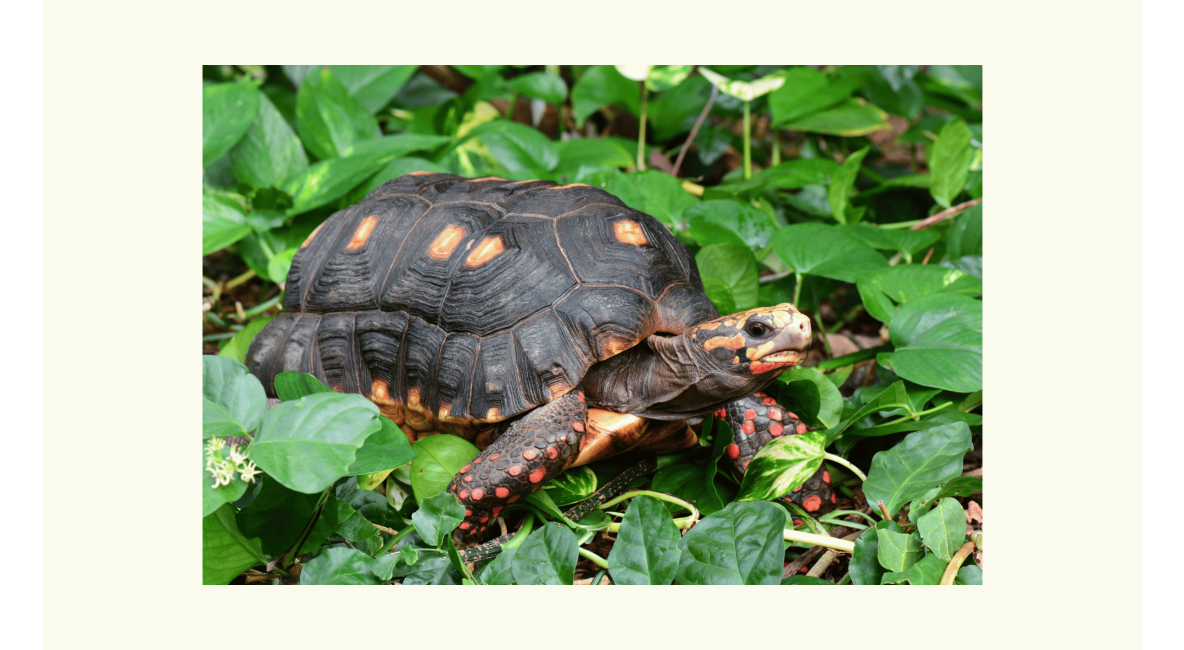
Red-footed tortoise stands out in the tortoise world not just for its striking red and orange markings, but for its distinctly tropical lifestyle. Unlike desert species that rely on dry heat and sparse vegetation, this tortoise thrives in warm, humid forests where food is varied and moisture is constant. Because of that, keeping one successfully in captivity is less about “tortoise basics” and more about recreating a living, breathing slice of rainforest on the ground.
These tortoises have a reputation for being both hardy and sensitive at the same time—hardy once their environment is correct, but quick to show stress when humidity, diet, or temperature drift out of range. That balance is what makes them so rewarding for keepers who enjoy dialing in a more complex setup and watching natural behaviors unfold.
Natural History & Behavior
Red-Footed Tortoises are native to rainforests, savannas, and edge habitats across South America and parts of Panama. In the wild, they are opportunistic omnivores, meaning they don’t just eat plants—they also consume fallen fruit, flowers, fungi, and occasionally carrion or animal protein.
They are more active than many desert tortoises and will often roam, forage, and explore their environment throughout the day. While they can become tolerant of handling over time, they are not “cuddly” pets and do best when observed rather than frequently handled.
Enclosure Setup
Because they originate from humid tropical regions, Red-Footed Tortoises need a warm, moisture-rich enclosure that supports both hydration and shell health.
A juvenile can be started in a large indoor tortoise table or custom enclosure, but adults require significant space. Many keepers eventually transition them to outdoor enclosures in warm climates.
Key enclosure requirements:
-
Warm side basking area: ~88–92°F
-
Ambient temperature: ~75–85°F
-
Night temperatures: can safely drop into the low 70s
-
Humidity: 70–90% (very important for proper growth and shell health)
-
Substrate: coconut coir, organic soil, orchid bark mix (moist but not soggy)
They should also have multiple hiding areas, dense plant cover, and shaded zones to mimic a forest floor environment.
UVB lighting is essential if housed indoors. A high-quality UVB tube should be provided for proper calcium metabolism and shell development.
Diet & Feeding
Red-Footed Tortoises have one of the most varied diets of any commonly kept tortoise. In captivity, diet should be high in fiber, moderate in protein, and rich in leafy greens and fruits.
Staple foods:
-
Collard greens, dandelion greens, mustard greens
-
Hibiscus leaves and flowers
-
Squash, cactus pads, and leafy weeds
Fruits (in moderation):
-
Papaya, mango, melon, berries, banana
Protein (occasional but important):
-
Earthworms, snails, cooked egg, or high-quality tortoise diet pellets
A key mistake in captivity is feeding too much fruit or too much protein, which can lead to rapid growth, shell deformities, or kidney stress. Calcium supplementation should be offered regularly, especially for juveniles.
Fresh water should always be available in a shallow dish large enough for soaking.
Humidity & Hydration
Humidity is one of the most critical aspects of Red-Foot care. Low humidity environments can lead to pyramiding (raised, uneven shell growth), dehydration, and respiratory issues.
Daily misting of the enclosure, moisture-retaining substrate, and regular soaking (especially for juveniles) help maintain proper hydration.
Unlike desert tortoises, Red-Foots actually thrive in damp environments as long as ventilation prevents stagnant air.
Growth & Lifespan
These tortoises are relatively slow-growing compared to many reptiles, but still reach a substantial adult size of 10–14 inches depending on locality and sex. With proper care, they can easily live 40–60+ years, and some individuals may exceed that.
This is truly a multi-decade commitment, often outliving the original keeper’s lifestyle changes.
Temperament & Handling
Red-Footed Tortoises are generally calm and tolerant, especially when raised in consistent conditions. However, they are naturally solitary and do not seek interaction.
They can learn feeding routines and may approach keepers during food time, but handling should be minimal and gentle to avoid stress.
Common Health Issues
Most health problems in captivity are related to husbandry rather than disease.
Common issues include:
-
Shell pyramiding (low humidity or improper diet)
-
Respiratory infections (too cool or too dry conditions)
-
Parasites (especially in wild-caught or poorly quarantined animals)
-
Metabolic bone disease (lack of UVB or calcium imbalance)
Preventative care through proper setup is far more effective than treatment after symptoms appear.
Keeping a Red-Footed Tortoise long-term is really about consistency more than complexity. When heat stays steady, humidity is high, and the diet stays diverse and balanced, they settle in beautifully and show their most natural behaviors—slow roaming, active foraging, and calm confidence in their space.
For keepers willing to maintain a true tropical environment year-round, they offer one of the most visually unique and behaviorally interesting tortoise experiences in the hobby, with the added bonus of being a companion that can span decades when properly cared for.


